
The word resistant can sound discouraging.
Especially when you have already tried medication, therapy, or both and are still waiting to feel like yourself again.
In psychiatry, treatment-resistant depression does not mean untreatable depression. It generally describes depression that has not improved enough after appropriate treatment attempts.
Sometimes that means a medication helped, but not enough. Sometimes side effects made continuing difficult. Sometimes several approaches have been tried and the symptoms are still interfering with everyday life.
At that point, the conversation may begin to change.
Where TMS May Fit
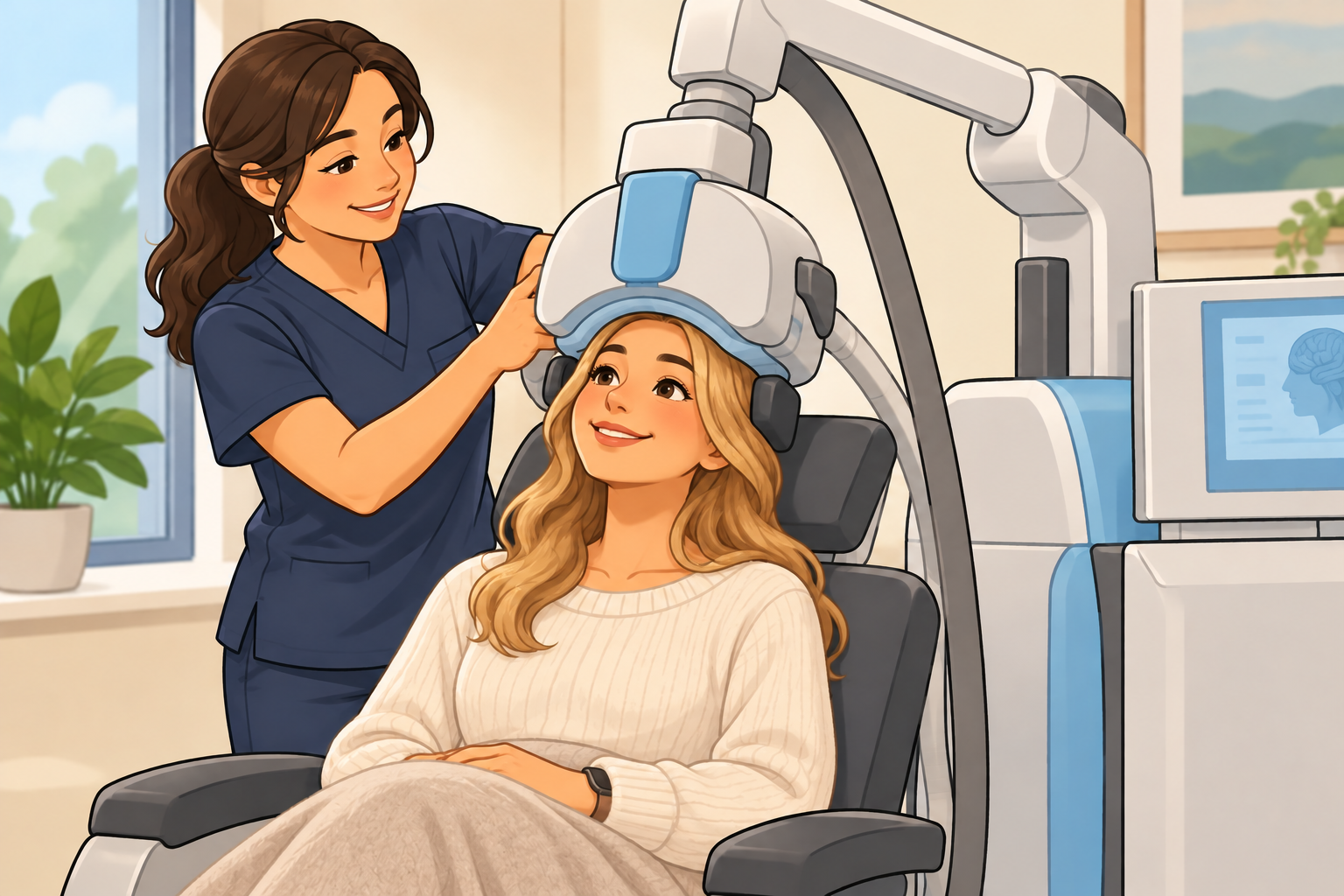
Transcranial Magnetic Stimulation, or TMS, is a non-invasive treatment that uses magnetic pulses to stimulate areas of the brain involved in mood regulation. Unlike medication, the treatment is delivered directly through magnetic stimulation rather than circulating throughout the body.
TMS has been studied specifically in people with major depressive disorder who have not experienced satisfactory improvement from antidepressant treatment.
Research continues to support its use for treatment-resistant depression. A 2023 meta-analysis of randomized, sham-controlled studies found that patients who had experienced two antidepressant treatment failures were more likely to achieve both response and remission with rTMS than with sham treatment.
That does not mean TMS will work for everyone.
It means that when the first path has not brought enough relief, there may still be another path worth discussing.
Treatment resistance is not the end of treatment.